BERNARD BUFFET
ABOUT
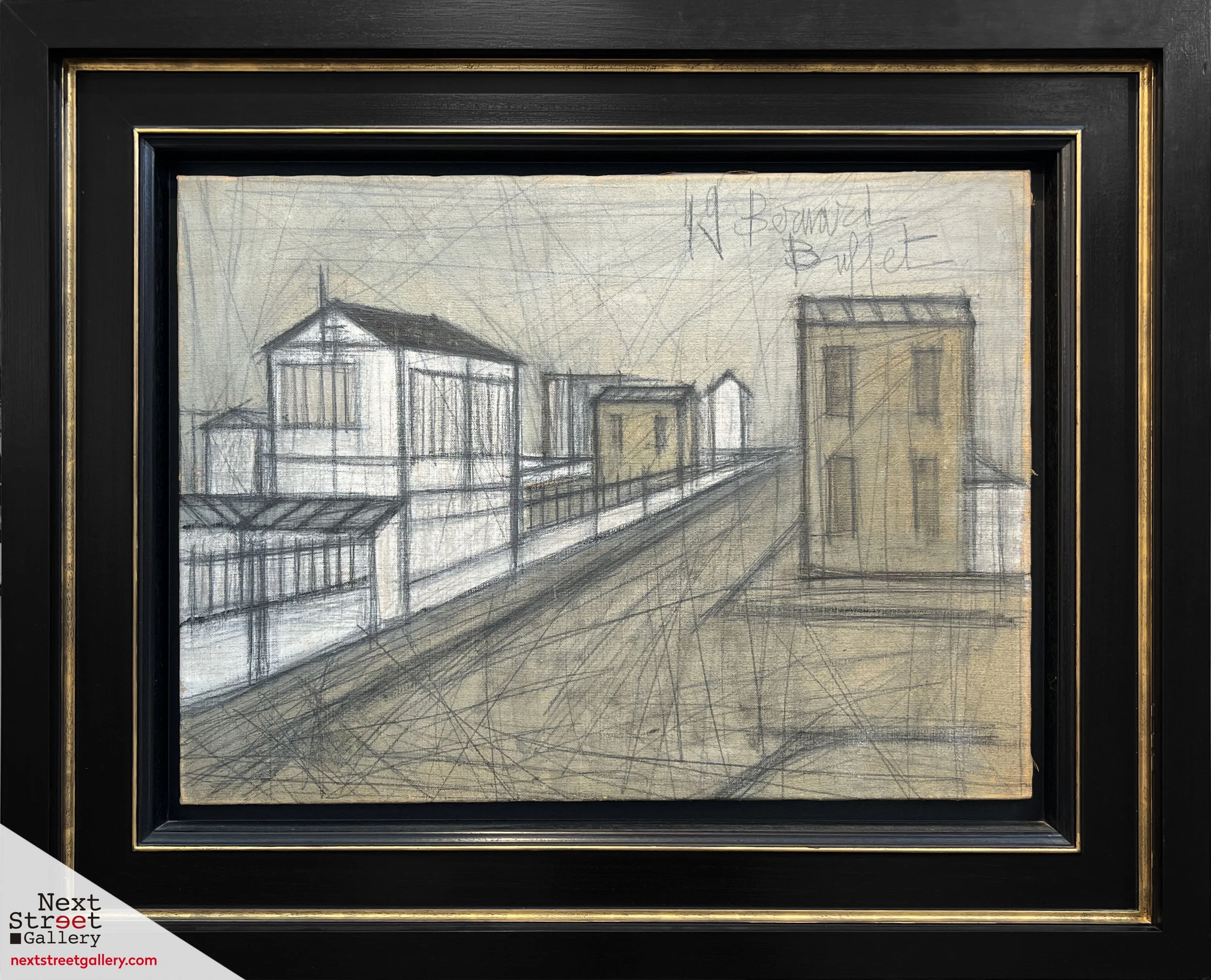
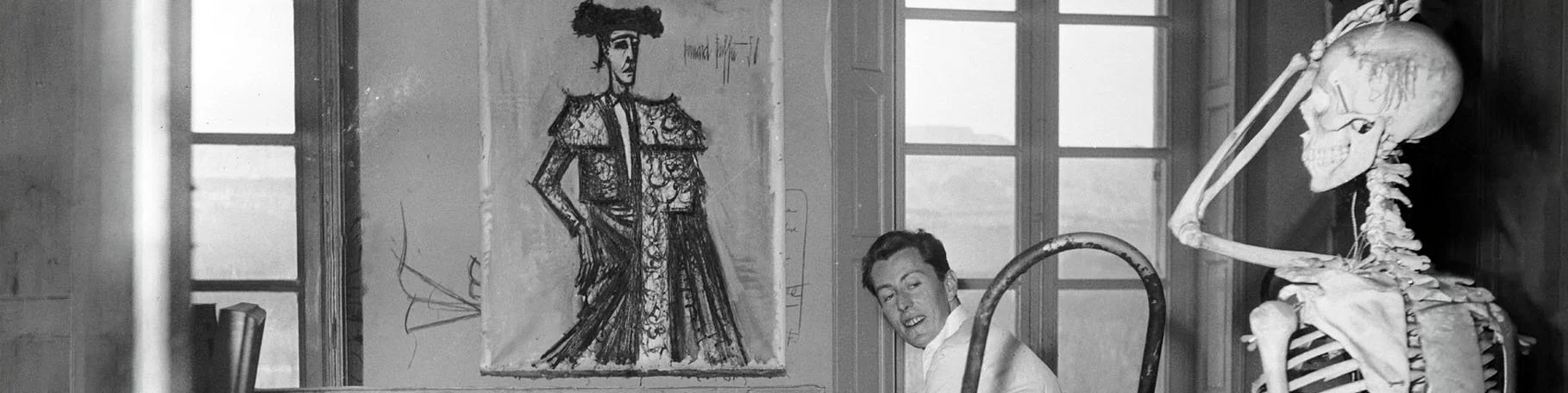
Bernard Buffet (1928–1999) was one of the most prominent figures of post-war French painting. Associated with Miserabilism and figurative painting, he developed an immediately recognizable visual language characterized by sharp black lines, elongated forms and a restrained, often somber palette.
Emerging in the Paris art scene in the late 1940s, Buffet gained recognition at a remarkably young age. At a time when abstraction was becoming increasingly dominant, he remained committed to figurative painting, developing a distinctive approach marked by austerity, tension and a profound sense of solitude.
Throughout his career, Buffet explored a wide range of subjects, including portraits, still lifes, landscapes, cityscapes, religious scenes and representations of clowns. Despite this diversity, his distinctive graphic style gave remarkable coherence to a prolific body of paintings, drawings and prints.
Buffet’s work is represented in major public collections in France and internationally, while the Bernard Buffet Museum in Japan holds an extensive collection dedicated to his work. His singular approach to figuration has secured his place as one of the most recognizable French painters of the post-war period.