ROY LICHTENSTEIN
ABOUT
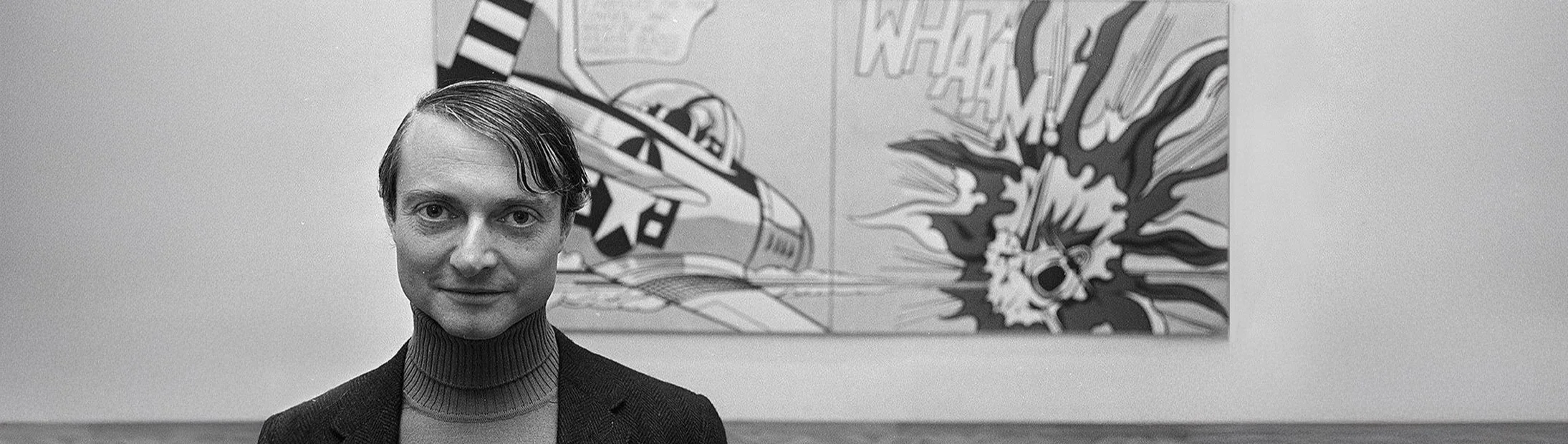
Roy Lichtenstein (1923–1997) was an American artist and one of the central figures of Pop Art. Emerging in the early 1960s, he developed a distinctive visual language inspired by comic strips, advertising and the graphic conventions of mass-produced imagery, transforming familiar elements of popular culture into carefully constructed paintings, prints and sculptures.
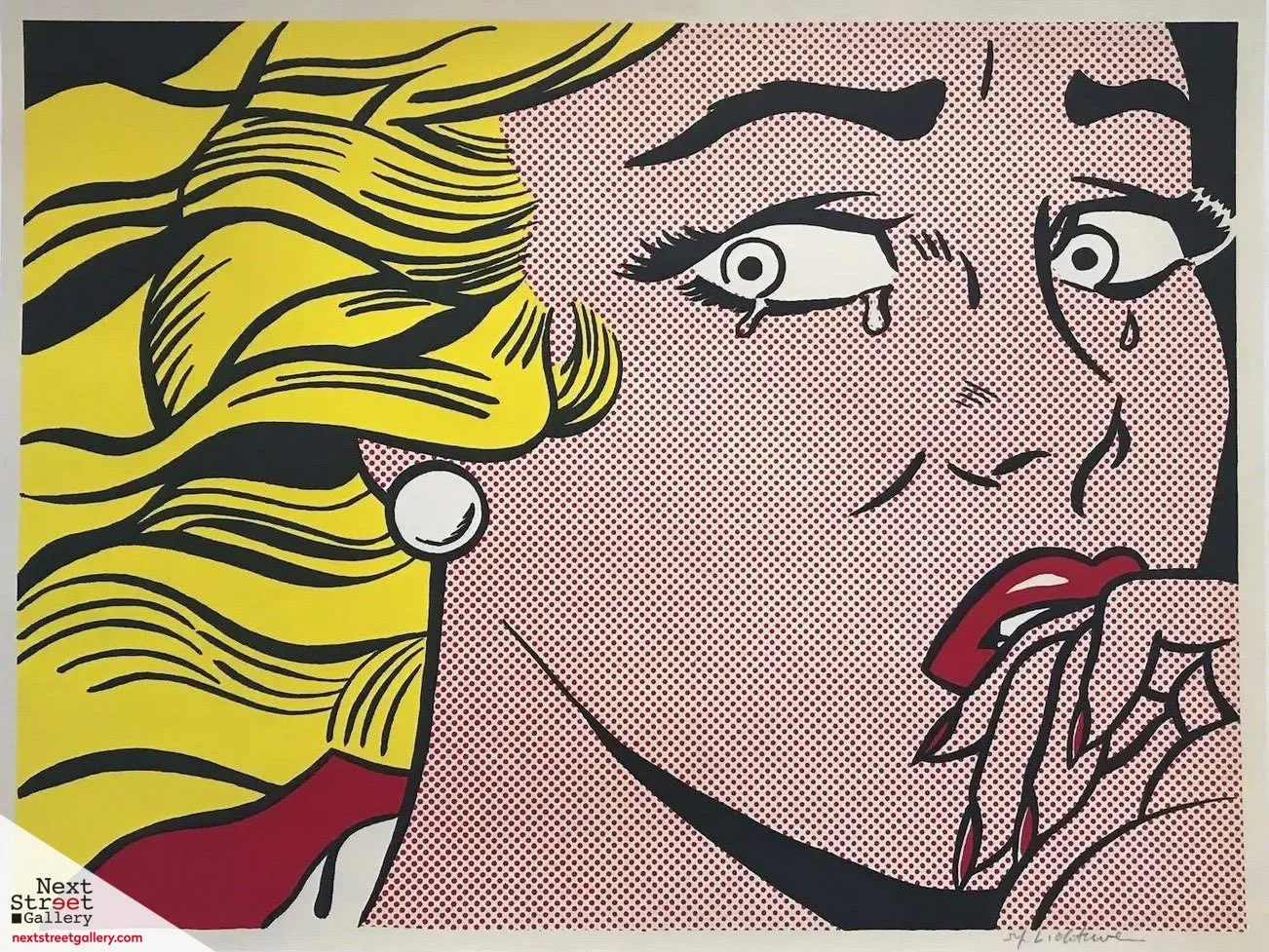
Lichtenstein became particularly known for his use of bold outlines, primary colors and Ben-Day dots, a commercial printing technique that he enlarged and reproduced by hand. By isolating and reworking images drawn from comics and advertisements, he explored the relationship between mechanical reproduction and artistic authorship, often creating a deliberate tension between emotional subject matter and the cool, detached appearance of his compositions.
Works such as Whaam! (1963), Drowning Girl (1963) and his series of paintings depicting romance, war and everyday objects became defining images of the Pop Art movement. Yet his practice extended far beyond comic-book imagery. Throughout his career, Lichtenstein revisited art-historical genres including landscape, still life and the nude, while engaging with artists and movements ranging from Picasso and Matisse to Cubism, Futurism and Abstract Expressionism.
Through appropriation, repetition and a visual language borrowed from commercial printing, Lichtenstein challenged distinctions between fine art and popular culture. His work remains central to the history of postwar American art and to broader discussions surrounding reproduction, mass media and the circulation of images.