ANTONIO SEGUI
ABOUT
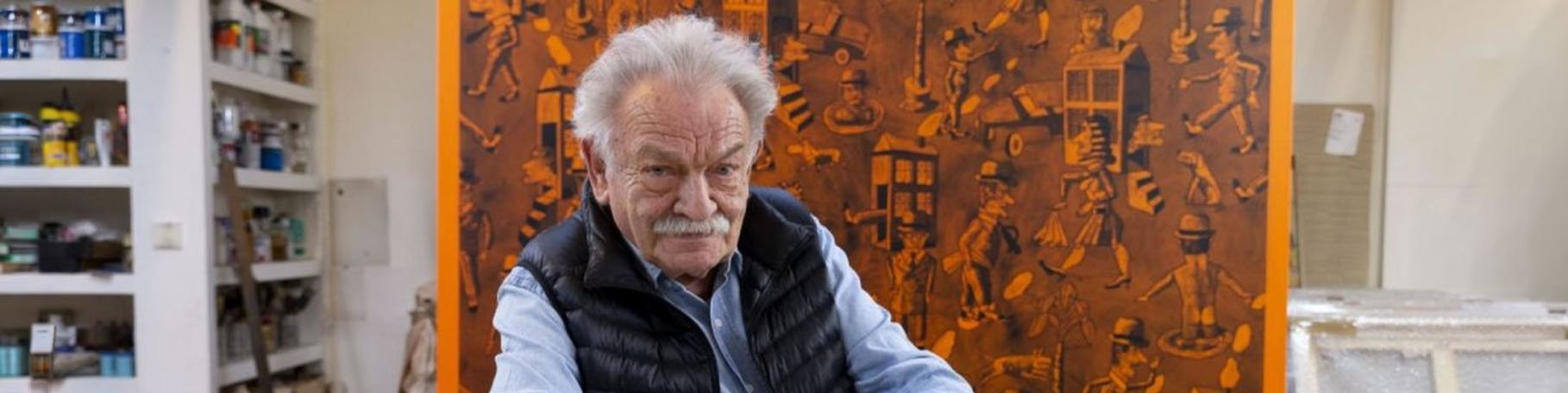
Antonio Seguí (1934–2022) was an Argentine artist whose practice encompassed painting, drawing, printmaking, sculpture and illustration. Based in Paris for much of his career, he developed a distinctive visual language combining graphic precision, humor and social observation.
After studying and travelling extensively across Europe and Latin America, Seguí settled permanently in Paris in the 1960s. His Argentine roots remained an important presence throughout his work, alongside influences ranging from George Grosz and Otto Dix to Fernand Léger and Diego Rivera.
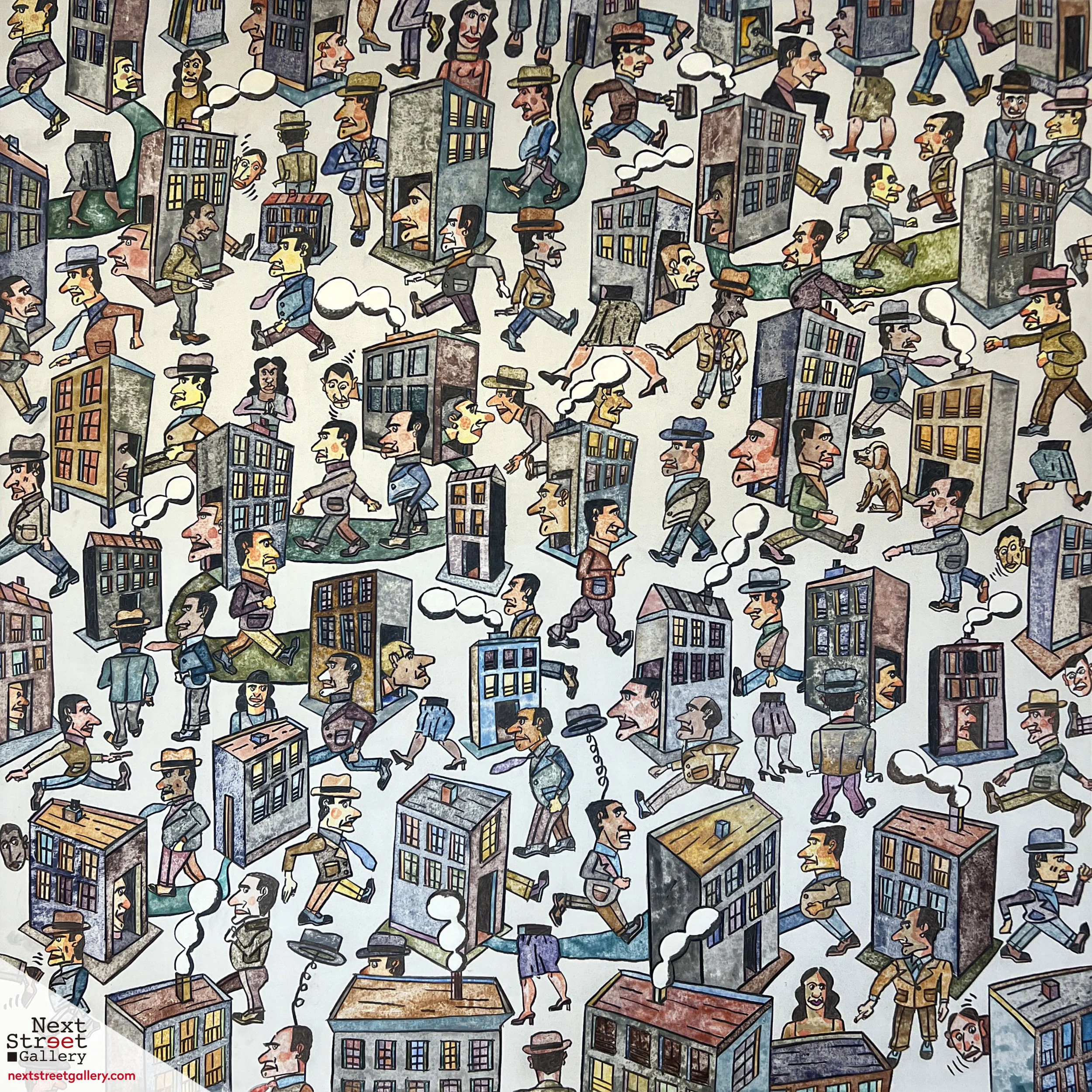
Seguí is particularly known for his crowded urban scenes populated by small, anonymous figures, often dressed in hats and suits. Moving through dense and labyrinthine cities, these recurring characters transform everyday life into a theatre of absurd encounters. Through them, Seguí explored human behaviour, solitude and modern society with irony, tenderness and subtle social criticism.
Working across painting, charcoal, pastel, ink and printmaking, he created an immediately recognizable graphic style situated between figuration, comic imagery and satire. His work has been exhibited internationally and is held in major public collections, including the Museum of Modern Art in New York and the Centre Pompidou in Paris.