In Sébastien Bayet's paintings, the studio is more than a setting. It is a portrait of the artist, told through objects, materials and the traces of making.
For Sébastien Bayet, the artist's studio is a subject in its own right. Works in progress, scattered objects, fragments of colour, the quiet disorder of creation: these are the things that reveal an artist's world.
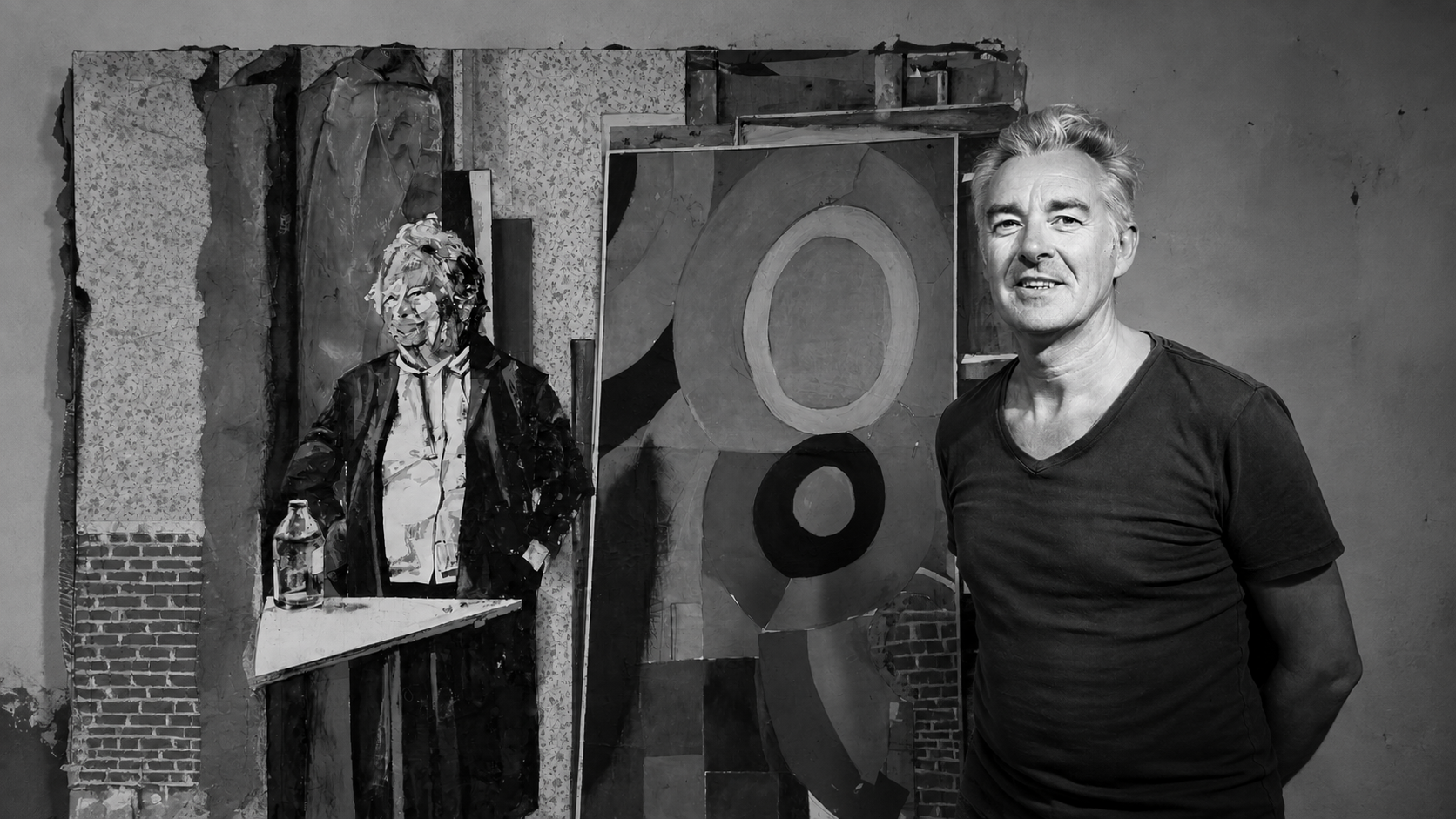
In his recent series, Bayet revisits the studios of figures such as Sonia Delaunay, Frida Kahlo, Hilma af Klint, Nicolas de Staël, Tracey Emin and Rose Wylie. He does not reconstruct these interiors with documentary precision. Instead, he reimagines them in his own visual language, so that each studio becomes a portrait without relying on a face: a presence felt through the space someone inhabits and the work around them.
Material carries this idea further. Bayet moves between painting, collage and relief, combining oil paint with textiles, worn fabrics and found materials. Since 2017, his practice has included discarded sailcloth once used by Vezo fishermen in Madagascar, where he spends part of his time. Marked by use, weather and age, these fabrics arrive on the canvas with a history already embedded in their surfaces.

The result is a body of work that is felt as much as seen. Fabrics overlap, edges stay visible, and painted passages meet surfaces already altered by time. The image is built in layers, and so is its sense of memory.
In works such as Après l'atelier – Sonia Delaunay, portraiture, geometric forms and textile fragments share a single composition. The studio becomes both a real place and an imagined one, where Bayet's own materials meet the artistic histories he chooses to revisit.
At NextStreet Gallery, these works reward a slower look. Seams, frayed edges and traces of wear are part of how the paintings are read, revealing details that only come into focus up close.
For Bayet, the studio is ultimately a place of traces: of gestures, objects, influences and time. Material becomes memory made visible.